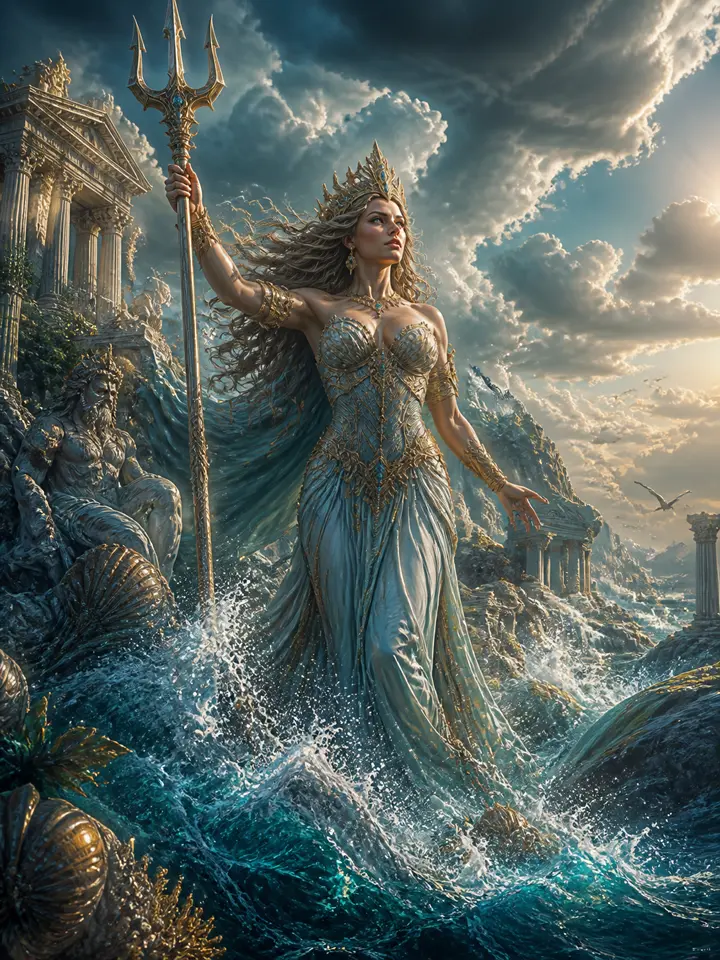
01 · Art style
Mythology for Greek mythology stories
Selected from the same visual-style library used in the dashboard.
 FacelessReels.coStart planning
Classical stories, modern short-form pacing
Run a mythology channel without appearing on camera. FacelessReels brings scripts, illustrated scenes, narration, captions, and music into one video workflow. Watch Ares's completed story, then choose the look and voice for recurring retellings while keeping your source tradition and final review in your hands.
For more than a year,…
Greek mythology stories strategy
A channel built around Greek mythology stories needs recognizable episodes without assembling every asset by hand. Choose a mythic conflict, art style, narrator, and runtime; FacelessReels handles the script, generated scenes, voiceover, timed captions, music, and vertical render. Your job is to review the source version, character identities, and story logic. The paid workflow supplies production, while your editorial choices give the channel its identity.
FacelessReels draws its mythology direction from classical sources, including Homer, Hesiod, Ovid, and Apollodorus. Their versions can conflict. Review which version the narration follows instead of merging incompatible details into an apparently seamless story. Source awareness helps define the channel's editorial voice.
Visual continuity matters more than spectacle. Ares, the jar, or another symbolic object should remain recognizable across scenes. Random temples and statues cannot explain a choice or consequence. Review character identity, recurring objects, and the final payoff before sharing.
Greek mythology stories creative configuration
Choose the look and sound once, then reuse them across episodes. This button carries settings, not the story brief. Sign in, review the setup, and choose an eligible paid plan before generating.
Selected from the same visual-style library used in the dashboard.
Preview the same voice asset available in the Language & Voice step.
Start with this music bed; change it to suit your channel.
A narration target, not a promise of exact finished length.
Your plan determines frequency. Connected, enabled accounts use your saved timezone.
Give new episodes a consistent subject focus while varying the story and evidence.
Real completed Greek mythology stories video
Ares Trapped in a Jar is a completed FacelessReels video, not a static mockup. It demonstrates the niche's delivery format; the prefilled recipe remains editable before a new Series is created.
Greek mythology stories topic map
The ideas rotate source episode, protagonist, story structure, and visual object so a recurring mythology Series can remain recognizable without becoming repetitive.
Open with the war god already trapped, then work backward to the brothers who captured him and the messenger who finally intervened.
Research routeHomer's Iliad, Book 5, with later retellings kept separate.Center the episode on the decision to compete and distinguish the weaving contest from the different moral emphasis later retellings add.
Research routeOvid's Metamorphoses, with explicit attribution to Ovid's Roman-era version.Let the thread remain the visual anchor while the story moves from Ariadne's decision to Theseus's route and escape.
Research routeCompare Apollodorus and other classical accounts before choosing one sequence.Tell the Judgment of Paris as a decision-consequence story rather than trying to summarize the entire Trojan War.
Research routeClassical summaries and surviving source traditions, with disputed details labeled.Build toward the rule governing Eurydice's return, then make the final turn resolve the opening question without inventing inner monologue.
Research routeVirgil and Ovid provide major versions; select and name the version used.Original Greek mythology stories story brief
30–40 seconds targetNassim voiceMajestic captionsFor more than a year, the Greek god of war could not fight—because two giants had sealed him inside bronze.
A hook and scene direction to develop, not final narration or a promise to reproduce the sample. The setup button carries creative settings only.
In the Iliad, the goddess Dione recalls how the brothers Otus and Ephialtes bound Ares and shut him in a bronze jar. The first scene should show the confinement already in progress: the object, the trapped god, and the contradiction of a war god unable to escape. It should not reveal the rescue in the opening image.
The middle establishes the duration given in the poem and the role of the brothers' stepmother, Eriboea, who alerted Hermes. Keep this version compact and avoid borrowing motives or extra battles from unrelated later retellings. Hermes then steals Ares away, worn down by confinement.
The payoff is not that Ares suddenly wins a fight. It is that divine power in Greek myth is still constrained by traps, rules, and other actors. End by identifying the source as Homer's Iliad and inviting the next episode to examine what happened to the brothers—without pretending the poem gives every detail modern retellings include.
Greek mythology stories production direction
These choices give the channel a coherent dramatic tone. Carry the settings into Series setup after signing in, then adjust them to suit your chosen myth.
Creates a coherent epic palette for gods, mortals, palaces, and symbolic objects without forcing every myth into photorealism.
A deep delivery supports dramatic names and consequences. The script should still sound conversational rather than like a museum audio guide.
A more formal caption treatment matches the visual tone while preserving mobile readability for unfamiliar names.
The orchestral preset supports mythic scale, and the saved noon schedule remains local to the creator's Series timezone.
Greek mythology stories quality system
Greek mythology has no single modern canon. Popular summaries often merge Greek and Roman names, motives, and endings. A credible Series chooses an episode and source tradition, then states when another well-known version differs. That small editorial habit separates useful mythology content from confident but unreliable recap channels.
Generated scenes illustrate the retelling; they are not ancient artifacts. Review armor, symbols, divine attributes, and recurring objects so visual continuity does not rewrite the chosen source.
Greek mythology stories questions
Use the surviving classical source most relevant to the chosen episode and name it when versions differ. Homer, Hesiod, Ovid, Apollodorus, and tragedians do not always tell the same sequence.
An eligible plan covers scripts, generated scenes, narration, captions, music, and completed videos. You choose the creative direction and review source accuracy and character continuity.
Yes. The page begins with the 30–40 second format, but the final Series Details step can switch to 60–70 seconds when the episode needs more context.
No. They are illustrative visual assets for the retelling and should never be labeled as archaeological or historical evidence.
Yes, after the creator connects and enables each available account and completes the platform-specific publishing confirmations.
Carry these Greek mythology stories settings through sign-in, then review your Series. A paid plan covers generation; this page does not generate a video or carry the example brief.